Every Sunday, we publish a fast, signal‑dense briefing on the biggest shifts in AI, jobs, and builders. If you want this in your inbox, Join the Sunday Special.
InMarch 2026, the AI infrastructure story stopped being about models and started being about watts, water, and where the power grid breaks first.
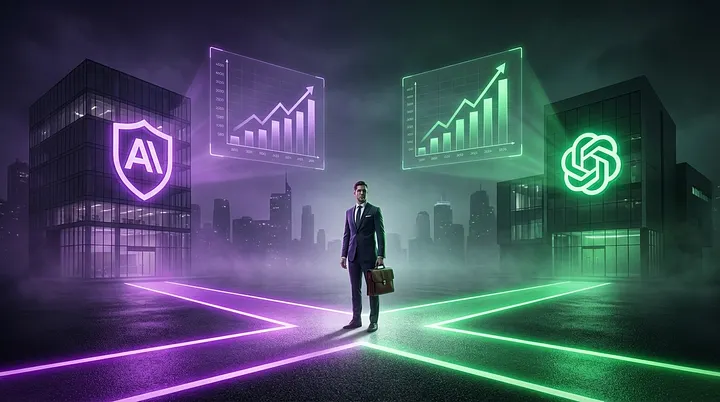
NVIDIA’s GTC just closed. Morgan Stanley sent a quiet warning that most executives aren’t reading carefully enough. And OpenClaw — now owned by OpenAI — crossed a line that separates AI that talks from AI that acts.
Put them together, and the picture isn’t about hype. It’s about three systems — compute, capital, and agency — tightening at the same time.
1. NVIDIA GTC: The infrastructure bet nobody wants to miss
NVIDIA’s flagship conference this week wasn’t just a product showcase. It was a signal about where the foundational layer of AI is going — and who gets to build on top of it.
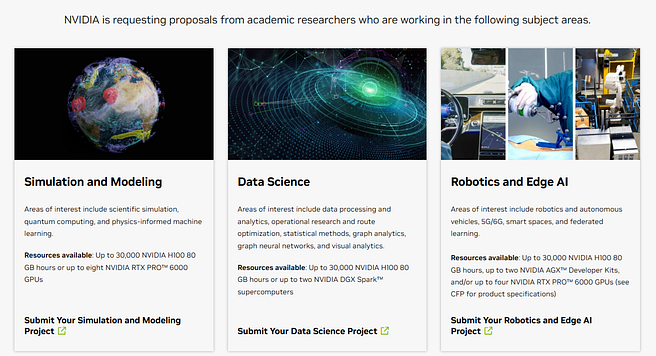
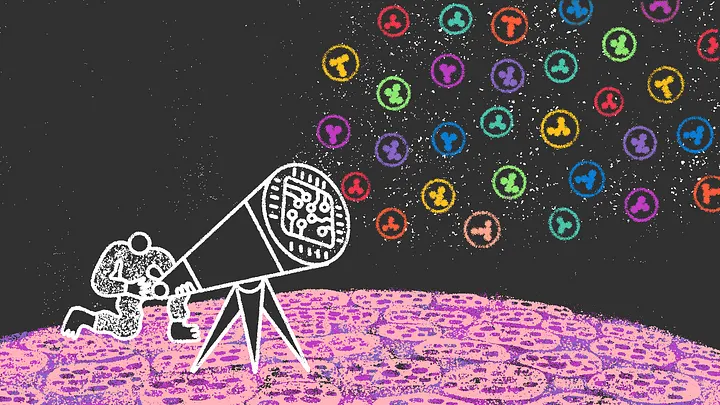
The expansion of NVIDIA’s Academic Grant Program is the clearest read. Grants now cover up to 30,000 H100 GPU hours, DGX Spark kits, AGX and RTX Pro hardware, cloud access, and software — awarded to university teams working in simulation, robotics, data science, quantum, physics-informed ML, federated learning, and autonomous systems.
That’s not charity. That’s seeding the next generation of builders with the exact compute stack that enterprise AI runs on.
The practical implication is simple: researchers and early-career engineers who build fluency on H100-grade infrastructure now will enter a job market where that fluency is already assumed. The grant window is open. Most people aren’t applying.
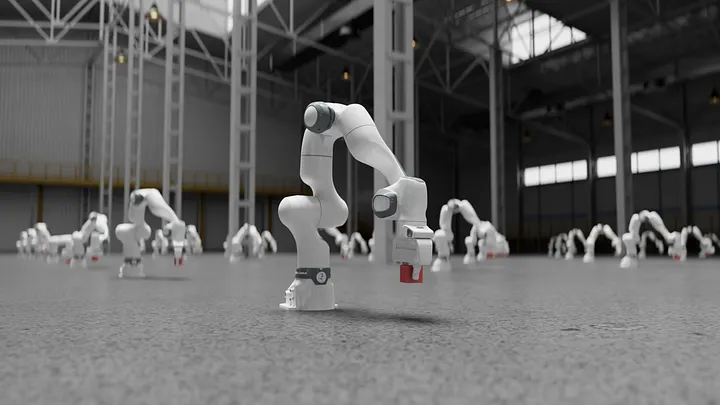
For builders who aren’t in academia, GTC’s deeper signal is directional. NVIDIA is placing its largest bets on simulation, edge AI, and robotics — not just LLMs. The next infrastructure cycle will be physical as much as digital.
2. Morgan Stanley’s warning: The leap is closer than your planning assumes
Morgan Stanley’s latest AI analysis doesn’t read like a research note. It reads like a fire alarm for executives who are still treating AI as a productivity tool rather than a structural variable.
The core argument: concentrated compute at the top U.S. labs is about to produce a capability jump that will “shock” investors who are modeling linear progress. The survey data behind the warning is already showing cracks — roughly a 4% net workforce reduction in the past year tied directly to AI adoption, visible in the macro numbers, not just in company announcements.
The energy dimension is where the warning gets genuinely structural. The U.S. could face a 9–18 GW power shortfall by 2028 — representing 12–25% of projected AI data center demand. That’s not a theoretical risk. It’s a constraint on how fast the compute expansion can actually happen.
What does that mean for builders and career-minded professionals?
It means the bottleneck isn’t model capability anymore. It’s infrastructure: power, cooling, chips, and the engineers who can deploy AI systems inside those physical constraints. The people who understand both the model layer and the infrastructure layer underneath it are going to be extraordinarily scarce and extraordinarily valuable.
The question to sit with: does your current skill stack put you closer to the model surface or the infrastructure layer? Both matter. Neither is safe to ignore.
3. OpenClaw and the shift from “AI that talks” to “AI that acts”
The OpenClaw update this week crossed a line that deserves more attention than it received.
OpenClaw — acquired by OpenAI in February 2026, already at 68,000 GitHub stars and outpacing React and Linux in velocity — can now control a live Chrome browser autonomously. Not simulate it. Not describe what it would do. Actually operate it.
That is the agent transition, made concrete.
The current version still requires Terminal setup. It’s a developer-first tool. But OpenAI’s ownership and trajectory make the consumer version a matter of when, not if. The developer community has already sketched what it looks like: a general-purpose agent that navigates the web, completes multi-step workflows, and handles digital tasks the way a capable intern would.
The leverage question for builders is straightforward: do you want to understand agent architecture before the consumer release, or after?
The people who built fluency with ChatGPT plugins in 2023 had a 12-month head start on everyone who waited for the polished version. The same window is open right now with agentic tools. OpenClaw in its current form is rough. That’s the point. Learning the rough version is the advantage.
Reading the three signals together
NVIDIA, Morgan Stanley, and OpenClaw aren’t separate stories. They’re the same story at three different layers.
NVIDIA is showing where the foundational compute is going and who gets early access to it. Morgan Stanley is showing that the economic impact has already started — in hiring data, energy planning, and investor modeling — and that the next jump is closer than consensus assumes. OpenClaw is showing what the agent layer looks like when it stops being a demo and starts being a tool.
The pattern that connects them:
- Infrastructure is the new moat — compute access, energy planning, and physical AI systems are where scarcity is moving
- Macro signals are already visible — workforce compression isn’t theoretical, it’s in the survey data
- Agents are graduating from chat to action — and the builder window on that transition is still open
The most durable position in 2026 is not the one that avoids AI. It’s the one that understands the stack deeply enough to orchestrate it — to sit at the layer where judgment, system design, and coordination amplify what agents can do.
That position is still being built. The people building it now will have options that won’t exist in 18 months.
The Sunday Special tracks these signals every week. If this issue helped you think more clearly about where AI is actually going — join us. One brief, every Sunday, no noise.
This article is one signal. The Sunday Special tracks them every week.
🟣 AI events, learning paths, builder calls, and career shifts every Sunday.
👉 Join the Sunday Special — by TheAIEntrepreneurs Team