On March 5, 2026, OpenAI released GPT‑5.4, the first AI model that can reliably use a computer better than most humans on real desktop benchmarks. This isn’t just another “slightly smarter chatbot” update — it’s a visible shift toward agents that can actually do your work for you.
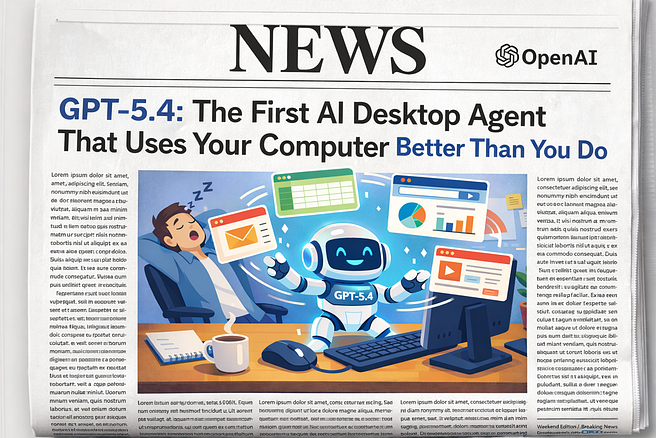
From Chatbot to Desktop Agent
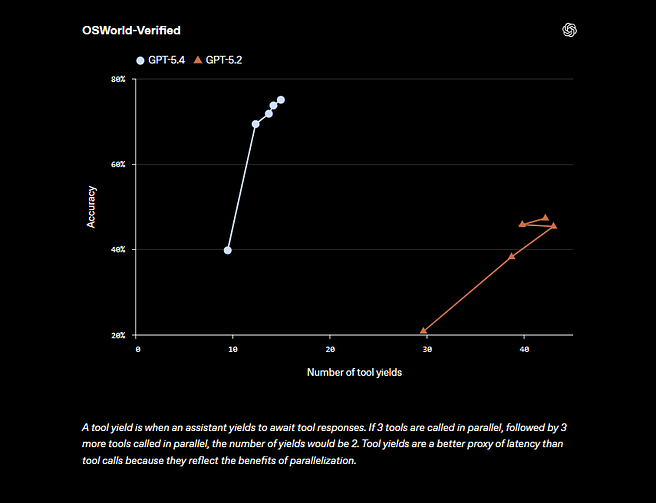
On the OSWorld‑Verified benchmark, which measures how well an agent navigates a desktop with screenshots, mouse, and keyboard, GPT‑5.4 scores 75% vs a human baseline of 72.4%. In other words, the model is now better than the average person at clicking through apps, menus, and dialogs to get tasks done.
OpenAI also reports that GPT‑5.4 matches or beats professionals across 83% of evaluated knowledge‑work tasks spanning 44 occupations, from finance to healthcare and operations. That combination — human‑level professional output plus superior desktop navigation — is what makes this release different from previous “smarter text model” upgrades.
What Changed in GPT‑5.4
GPT‑5.4 pulls together three strands that used to live in separate models: advanced reasoning, coding, and native computer‑use capabilities.
It can:
- Operate software through screenshots, clicks, and keystrokes, not just APIs.
- Handle huge contexts (up to around 1M tokens in the API) so it can plan and execute long workflows.
- Use a new “tool search” system to pick the right tools on demand, cutting token usage by about 47% in tool‑heavy agent workflows.

For end users, GPT‑5.4 Thinking in ChatGPT now shows an upfront plan for complex tasks so you can steer or correct mid‑response, instead of starting over after a long answer you didn’t want. That makes the model feel less like a chat partner and more like a junior colleague you can interrupt while they work.
GPT‑5.4 Real‑World Use Cases
Because GPT‑5.4 can both “think” and “click,” entire workflows start to look automatable:
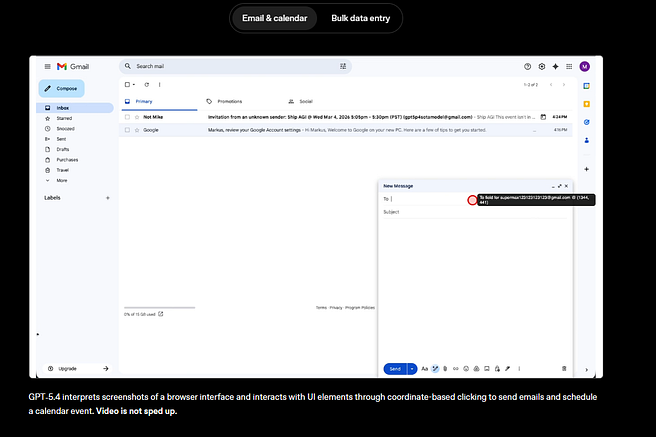
- Financial work: Build multi‑sheet models, pull data from integrated sources, and update assumptions directly inside Excel or Google Sheets via the new ChatGPT spreadsheet integrations.
- Legal and document‑heavy tasks: Parse long PDFs, extract key clauses, compare versions, and draft edits while maintaining structure and citation chains.
- Software development: Combine Codex‑level code generation with Playwright‑style UI automation to build, test, and debug apps directly in the browser.

- Operations and back‑office: Log into legacy portals, move data between systems, and generate reports — even when there is no clean API, only screens.
Benchmarks like WebArena‑Verified and Online‑Mind2Web show GPT‑5.4 setting new highs in browser‑based task completion as well, reinforcing that this isn’t just a lab demo.
Why GPT‑5.4 Matters for Knowledge Workers
Two numbers tell the story: GPT‑5.4 is 33% less likely to make false claims and 18% less likely to have any factual error in a response compared with GPT‑5.2, according to OpenAI’s internal evaluation on de‑identified real prompts. That reliability jump is what makes “let the AI run this workflow end‑to‑end” feel less like a stunt and more like a reasonable business decision.
If you’re a knowledge worker, this changes your day in three ways:
- You spend less time on click‑work: filing, copying, formatting, logging into portals.
- You move up a level to specifying outcomes: what you want built, analyzed, or drafted.
- Your leverage comes from oversight and judgment, not raw speed at the keyboard.
Today, GPT‑5.4 still needs supervision and clear constraints, especially in high‑risk domains. But the line it crossed — consistently beating humans at operating a generic desktop — is a clear signal of where the next wave of productivity gains (and job redesigns) will come from.
What’s Next?
Get more breakdowns like this in your inbox. Subscribe to The AI Entrepreneurs newsletter for weekly bite‑sized tutorials, tools, and playbooks to build smarter, faster, and with less guesswork. Join 70K+ founders and creators at AI Entrepreneurs — STANDOUT DIGITAL.