Automation is no longer a sci-fi promise — it’s a 2026 reality. At CES in Las Vegas, robots stepped out of research labs and into everyday life, signaling a clear shift from experimental prototypes to production-ready machines. This year’s show wasn’t about spectacle. It was about utility.

Before turning to the CES show floor, however, it’s worth noting that this transition was already taking shape beyond consumer tech.
A signal from healthcare — outside CES
Even as the tech world gathered in Nevada, robotics was quietly reshaping healthcare in Europe. Vitestro’s Aletta system offers an early example of how automation is beginning to ease real human friction — outside the spotlight.
Aletta®, the world’s first autonomous robotic phlebotomy device™ (ARPD™), automates the diagnostic blood collection process.

After earning EU approval in 2024, the blood-drawing robot is now active in Dutch hospitals in Amsterdam and Utrecht, helping address global phlebotomist shortages. Demonstrations have shown a 95% first-stick success rate, rising to 99% on difficult veins, with patients reporting the experience to be as painless as a human draw.
While skeptics point to high upfront costs – particularly when compared to low-cost manual services in regions like India — early adopters see Aletta as a way to reduce repeated needle attempts, patient anxiety, and staff burnout.
This system wasn’t showcased at CES. But it reflects the same broader shift the event made clear: automation is moving from experimentation to real-world deployment.
🤖 From context to the CES show floor
Beyond healthcare, consumer, industrial, and lifestyle robotics took center stage in Las Vegas. CES 2026 revealed how far robots have come and how close they are to everyday environments, from factories and warehouses to kitchens, sidewalks, and living rooms.

✔Humanoid assistants: beyond the prototype
For years, humanoid robots were limited to scripted movements and tightly controlled demonstrations. At CES 2026, they began to look more self-directed and AI-powered, signaling a shift toward machines designed for deployment rather than staged demos.
⬇️Boston Dynamics Atlas appeared in a polished, production-focused form under Hyundai’s ownership, paired with Google DeepMind‑class AI models and positioned for factory work rather than YouTube stunts.
Now under Hyundai’s ownership and paired with Google DeepMind AI, the fully electric, water-resistant humanoid is designed to handle industrial tasks, lift substantial loads, and even autonomously swap its own batteries, with Hyundai aiming to pilot Atlas in its plants later this decade.
⬇️LG CLOiD concept showed how a home humanoid might plug into an appliance ecosystem, resembling a torso on wheels that can fold laundry, prepare breakfast, and serve drinks by integrating directly with LG’s smart kitchen.

✅ LG CLOiD was named a 2026 Innovation Award Honoree in the Smart Home category for automating household tasks

⬇️SwitchBot Onero H1 took a slightly different approach, combining a wheeled base with arms to handle chores like laundry and cleaning, positioning itself as a consumer-focused humanoid that might actually ship.
Internationally, firms such as Unitree, NEURA Robotics, and Sharpa used CES to demonstrate “physical AI” platforms that can manipulate tools and navigate cluttered spaces. NEURA’s 4NE1 and MiPA platforms highlighted modular, collaborative robots designed for factories and labs, while Sharpa’s full-body humanoid emphasized dexterous hands and whole-body motion as it tackled complex manipulation tasks.
⬇️Unitree

⬇️Sharpa
These advances raise questions beyond capability — about workforce integration, safety standards, and how workplaces and homes may need to adapt for machines that now share physical space with humans.
✔The evolution of the robovac: conquering stairs
If humanoid robots showed ambition, robotic vacuums demonstrated refinement. CES 2026 focused on solving one of their longest-standing limitations: stairs.

Concepts like Dreame’s stair-climbing prototypes used combinations of legs and track-like mechanisms to move up and down steps, while designs similar to Roborock’s more agile robots experimented with wheel‑leg hybrids that can lift, lower, and even hop onto different levels. For single-story homes, high-end models integrated small robotic arms capable of lifting light objects and using specialized nozzles to clean more precisely around furniture.

✔When appliances become robots
Even traditional consumer electronics are becoming increasingly autonomous, blurring the line between appliances and robotics.
Smart refrigerators from brands like Samsung, GE, Hisense, and CHiQ showcased features such as voice-controlled doors, internal cameras, and automatic inventory tracking using barcode scanning and AI-based spoilage detection. Laptops like Lenovo’s motorized “Auto Twist” designs used camera tracking and motorized hinges to rotate the display toward the user or an audience, turning what used to be static hardware into responsive devices that move with intent.

⬇️Hisense

⬇️CHiQ
⬇️Lenovo ThinkPad Plus Gen 7 Auto Twist

Add in wellness hardware from companies such as Bodyfriend — massage chairs and relaxation systems that use robotics, sensing, and recommendation algorithms to adapt programs to posture and preference and the CES floor started to feel less like a gadget show and more like a catalog of quiet, embedded robots.

✔Wearables, delivery robots, and outdoor agility
Not every robot at CES tried to mimic a human body. Some aimed to augment it.
Hypershell’s exoskeleton systems wrapped around the lower body to boost endurance for hiking and industrial work, using onboard AI that anticipates motion and modulates assistance in real time.
⬇️Hypershell’s exoskeleton systems
Elsewhere, small outdoor and sidewalk robots navigated mock streets as last‑mile delivery platforms for groceries, parcels, and food, while food-tech robots behind counters mixed drinks, moved trays, or assisted in kitchens. Together with industrial players like Robotiq and NEURA focused on agile robot arms and grippers, these systems showed robotics spreading into logistics and food service as much as into the home
⬇️Robotiq

⬇️NEURA

✔The AI brains behind the bots
Beneath many CES 2026 robots sat NVIDIA’s physical-AI stack. Partners including Boston Dynamics, LG Electronics, NEURA Robotics, Caterpillar, and Franka showcased machines built on NVIDIA platforms combining perception, planning, and simulation. New open models like GR00T and Cosmos, alongside Isaac Lab-Arena and the OSMO edge-to-cloud framework, are accelerating robot training and evaluation. With the Blackwell-powered Jetson T4000 pushing more AI to the edge, these systems are moving beyond demos toward scalable, real-world deployment.
⬇️NVIDIA

Humanoid and collaborative robot developers emphasized that their systems are increasingly AI-defined: behavior can be updated over time by retraining or swapping models, making robots feel more like software platforms that happen to have bodies. That shift mirrors what is happening in healthcare with systems like Vitestro’s Aletta, where software updates can improve performance without changing the physical hardware
✔Why 2026 feels different
Whether it’s a healthcare robot reducing blood-draw anxiety, a humanoid lifting parts on an automotive line, an exoskeleton helping a hiker go farther, or a home machine folding laundry, 2026 stands out as a turning point. These are no longer speculative concepts or showroom curiosities. They are systems designed to integrate into work, healthcare, and home life.
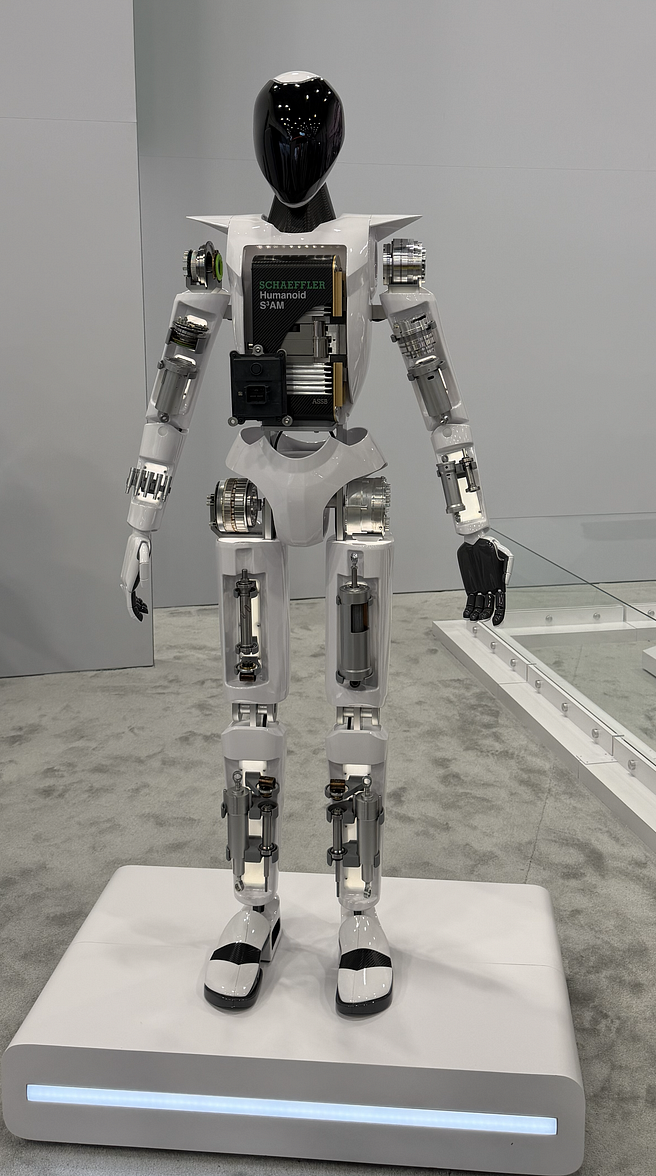
Schaeffler presented this humanoid as a mechatronics and actuation showcase, not a consumer-ready robot. It’s designed to demonstrate:
• Advanced electromechanical actuators
• Precision motion control for humanoid joints
• Modular drivetrain and joint systems relevant to industrial and humanoid robotics
This aligns with Schaeffler’s broader push into robotics, automation, and physical AI infrastructure, rather than building a standalone humanoid product like Boston Dynamics or Unitree.
If 2024 and 2025 were years of experimentation, 2026 is the year robots quietly begin to settle in — not as novelties, but as infrastructure. The question isn’t if these machines will change routines — it’s when people will stop noticing that they already have.
More to read:
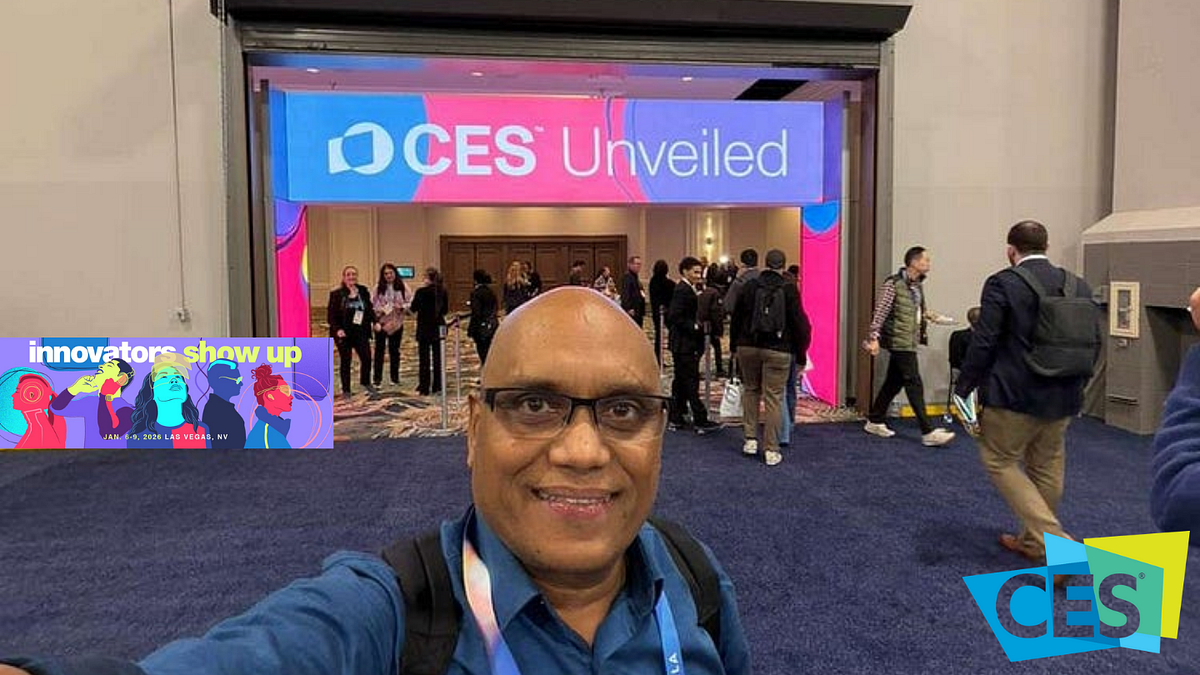
CES 2026: What We Actually Saw on the Floor
A first-hand, on-site account of observed demos and public claims at CES 2026 medium.com
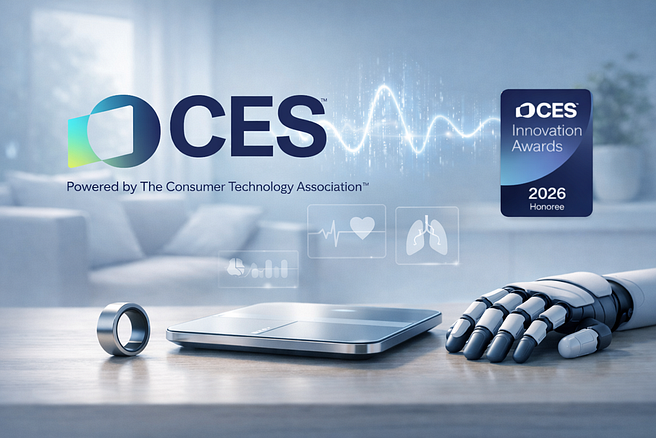
Inside CES 2026: 10 HealthTech Signals Shaping a Multi-Trillion-Dollar Future
From pediatric mobility to home diagnostics, CES 2026 showed where health tech is actually landing medium.com