Ready to unlock a world of AI-powered fun? Join our newsletter for weekly DIY guides, creative hacks, and exclusive tips from the AI Entrepreneurs: Visual Playground Series! Subscribe Now!
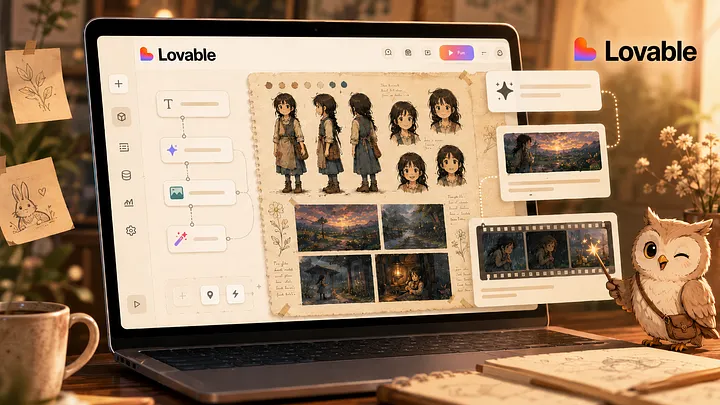
You don’t need a developer or any coding. Describe your tool, and Lovable turns it into a working web app in minutes.

This guide shows you how to build a free, warm, editorial-style web tool that helps anyone generate two paired AI prompts — one for a storyboard image, one for an image-to-video animation — for making cinematic anime short films. Step by step.
What You Need
- Lovable account — sign up free at lovable.dev
- A clear idea of who it’s for — in this case, indie creators making AI anime shorts
- About 30 minutes and ~5 credits
If you have these ready, you can go from blank screen to live tool in under an hour.
Step 1: Start a New Project
Go to Lovable → click New Project → name it anime-short-prompt-generator.
Step 2: Describe Your Tool
Use this prompt. Paste it into Lovable’s chat exactly as-is, then adjust the colors or fonts later if you want.

Build a single-page web app called “Anime Short Prompt Generator.”
Purpose: A free tool that helps users generate two paired prompts for making AI anime short films — one storyboard image prompt, one image-to-video animation prompt. It should feel like a small handmade tool, not a SaaS product.
Layout: Single column, centered, max-width 720px. Generous side padding and breathing room. Warm cream background (
#FAF6EC) with very subtle paper grain texture.Typography: Use Fraunces from Google Fonts for headlines (italic for subtitles), Inter for body text, JetBrains Mono for prompt output, and Caveat for handwritten-style accents.
Color palette: Cream background (
#FAF6EC), secondary cream for cards (#F2E9D4), dark warm brown for text (#2B2419), faded brown for labels (#6B5D48), terracotta accent (#C65D3A), sage accent (#7A8B6F), dusty rose for hover (#C89B8C).Header: Title “Anime Short Prompt Generator” in large Fraunces. Italic subtitle “Fill in a few fields. Get two prompts. Make a film.” A small handwritten Caveat-font note in dusty rose, slightly rotated.
Form fields (in a cream notebook-style card with a sage left margin line):
Title of your short (text)
Setting — where and when (text)
Protagonist — one person, one detail (text)
Emotional object — the thing the story is about (text)
Companion — silent witness (text)
Art style (dropdown): Ghibli watercolor / Makoto Shinkai high-detail / Soft cel-shading / 90s anime grain / Hand-painted gouache
Mood (dropdown): Wistful / Hopeful / Melancholy / Quietly joyful / Bittersweet
Time of day (dropdown): Golden hour / Pre-dawn blue / Overcast afternoon / Dusk / Moonlit night
Each label is uppercase with letter-spacing, with a small italic Caveat hint below it. Inputs are underline-style (transparent background, only a 2px bottom border).
Primary button: “Generate prompts” — terracotta, centered, with a soft shadow.
Output section (appears after click, fades in): Two stacked cards, each slightly rotated for handmade feel. Card 1 = “Storyboard Image Prompt.” Card 2 = “Video Animation Prompt.” Each card has a “Copy” button that copies the prompt to clipboard and shows “Copied!” for 2 seconds. The interpolated user inputs should appear in terracotta color inside the prompt text.
Card 1 template: “Create a single vertical anime animation development board for an original emotional short film titled ‘[TITLE].’ The board should include: a character sheet showing [PROTAGONIST] from three angles with expression studies, a detailed design sheet for [EMOTIONAL OBJECT], a small reference for [COMPANION], three to five story-beat panels arranged vertically showing key moments set in [SETTING], an environment color script, and handwritten-style margin notes. Art direction: [ART STYLE]. Lighting: [TIME OF DAY]. Mood: [MOOD]. Hand-painted feel, no digital sharpness.”
Card 2 template: “Title: [TITLE]. Reference: Use the uploaded storyboard and character sheet as the primary visual reference. Preserve all character designs, the [EMOTIONAL OBJECT] design, [COMPANION] appearance, [SETTING] details, and [TIME OF DAY] lighting throughout. Sequence: Animate the story beats in order shown on the board, holding each beat for 3 seconds. Camera: Slow push-ins and gentle held shots. Motion priority: Keep human motion subtle. Prioritize environmental motion — wind, fabric, light shifts. Mood: [MOOD]. Audio: Soft ambient tones. No dialogue.”
Surprise me button above the form: small terracotta ghost button in Caveat font that fills the form with one of five preset story ideas.
Footer: Caveat-font note: “made on a quiet weekend. prompts are yours to keep.”
No backend, no signup, no email capture. Mobile responsive. Smooth scroll to output after generation. Use lucide-react icons.
Hit enter. Wait 2–3 minutes. Your app appears in the preview.

In under 3 minutes, Lovable built a complete tool with:
- Warm editorial header with handwritten accents
- A notebook-style form card with eight input fields
- “Generate prompts” button with terracotta styling
- Two output cards with formatted prompts and copy-to-clipboard buttons
- Subtle paper texture and slight rotations for handmade feel
- Mobile-responsive layout
You now have a real working tool, not a wireframe.
Step 3: Add the “Surprise Me” Presets
Your tool needs sample data so users can see what a finished story setup looks like. Ask Lovable in the chat:
Add five preset story ideas to the “Surprise me” button. Each preset should fill all eight form fields with a complete, evocative example. Use these five:
1. “The Lost Wind Chime” — countryside porch in late summer / quiet girl, around nine, with a yellow ribbon / wind chime her grandmother made from sea glass / small ginger kitten / Ghibli watercolor / Wistful / Golden hour
2. “A Borrowed Umbrella” — Tokyo train station, monsoon evening / tired office worker, late twenties, loosened tie / bright red umbrella left on a bench / stray dog under the awning / Makoto Shinkai high-detail / Hopeful / Dusk
3. “The Quiet Postcard” — grandmother’s kitchen, early winter morning / old woman in a knitted shawl / unsent postcard from 1962 / old tabby cat on the windowsill / Hand-painted gouache / Melancholy / Pre-dawn blue
4. “The Paper Boat” — flooded village street after rain, mid-spring / barefoot boy, around seven, in an oversized raincoat / paper boat folded from his father’s old letter / small white duck / Soft cel-shading / Quietly joyful / Overcast afternoon
5. “The Forgotten Lantern” — mountain shrine path, autumn night / teenage shrine maiden with windblown hair / paper lantern that refuses to go out / young fox watching from the trees / 90s anime grain / Bittersweet / Moonlit night
When the button is clicked, randomly pick one and fill all fields with smooth fade-in animation.
Step 4: Polish the Visual Details
Click Visual edits (bottom-left of the editor). You can now click any element directly and change colors, text, spacing — no credits used.
For bigger style changes, prompt Lovable:
Make the paper texture slightly more visible. Add a soft inner shadow to both output cards. Increase the slight rotation on Card 2 to make the handmade feel more obvious. Make the terracotta color slightly warmer, closer to burnt sienna.
If you ever break the design, just ask:
Undo the last visual changes and revert to the previous version.
Step 5: Test the Copy Flow
Open your tool and walk through it like a real user:

- Click Surprise me → form fills with a preset
- Click Generate prompts → output cards appear with interpolated values in terracotta
- Click Copy on each card → confirm it says “Copied!” and the prompt is actually in your clipboard
- Paste into a notes app to verify the formatting
If anything’s broken, tell Lovable:
The Copy button isn’t actually copying to clipboard. Fix the navigator.clipboard.writeText call.
Does the Tool Actually Work? I Tested It End-to-End
To make sure this workflow isn’t just theory, I ran the two prompts through real tools and compared results:
Test 1: Storyboard prompt → ChatGPT (image generation). Result: A clean, dense storyboard image with character sheets, beat panels, and color script. Usable on the first try.
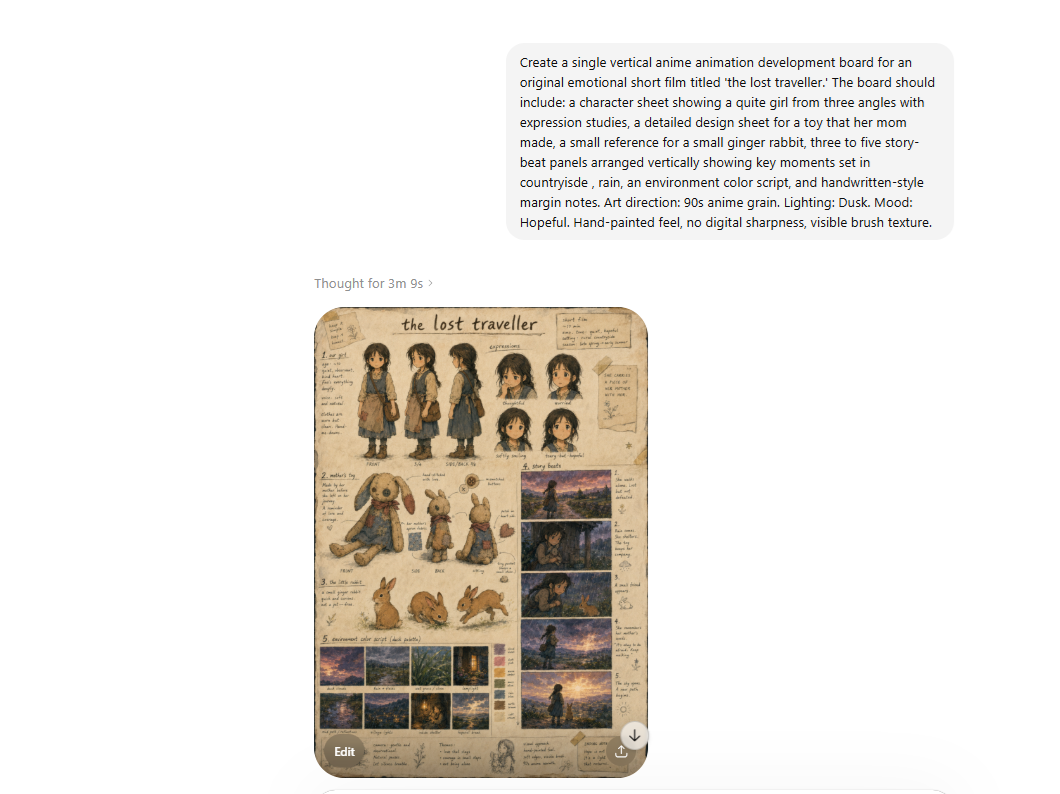
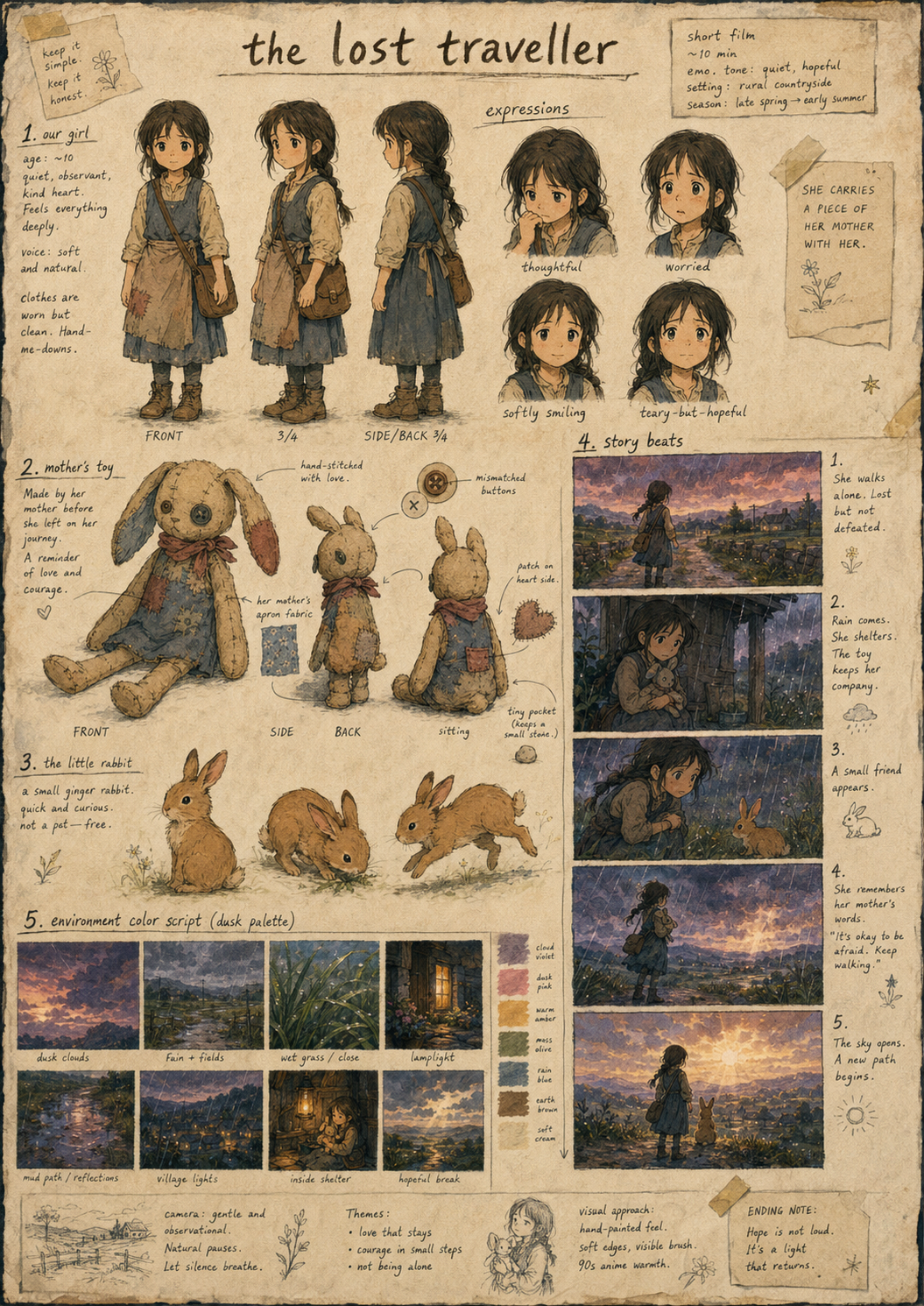
Test 2: Video prompt → Kling, without uploading the ChatGPT image. Result: Generic anime motion. Characters drifted from anything specific. Pretty, but it could’ve been anyone’s story.

Test 3: Video prompt → Kling, with the ChatGPT storyboard uploaded as reference. Result: Night and day. Character design held, the emotional object stayed consistent, the lighting and mood matched the board. This is the version that actually feels like a film.

The takeaway: the second prompt without the first image is just a video prompt. The second prompt with the first image is a movie. Don’t skip the upload step.
Step 6: Test on Mobile
Open your tool on your phone. If anything looks wrong, prompt:
Fix the mobile layout. The form card should have less side padding, the title should be 32px instead of 48px on mobile, and the output cards should stack with no rotation on small screens.
Step 7: Go Live
Lovable gives every project a free *.lovable.app URL by default — that’s enough to share on Twitter, Medium, or with friends.
If you want a custom domain:
- Buy a domain (~$12/year from Namecheap or Cloudflare)
- In Lovable → Settings → Custom Domain → add your domain and update DNS
- Wait up to an hour — Lovable handles HTTPS automatically
You’re live.
What to Add Later
Copy-paste these prompts one at a time as you grow:

Save favorites:
Add a “Save this prompt” button next to Copy. Saved prompts appear in a small drawer at the bottom of the page. Use localStorage so they persist across visits.
Share by link:
When prompts are generated, also create a shareable URL that encodes the form inputs as query parameters. Loading the URL pre-fills the form and auto-generates the prompts.
More art styles:
Add five more options to the art style dropdown: Tradigital cel / Pastel storybook / Inked watercolor / Sumi-e ink wash / Late-90s OVA grain.
Audio prompt:
Add a third output card called “Audio Prompt” that generates a short prompt for AI music tools, matching the mood and setting of the story.
Cost
- Free tier is enough for a tool this size (paid plans start at ~$25/month if you want more credits)
- Domain: ~$12/year (optional — the default lovable.app URL is free)
- Total: $0 if you stay on the free tier and use the default Lovable URL
A real frontend designer would charge $2,000+ for a tool this polished. This costs lunch money — or nothing at all.
Quick Fixes
- Blank page — “The output section shows a white screen after I click Generate. Fix this.”
- Copy not working — “The Copy button doesn’t actually copy to clipboard. Debug the clipboard call.”
- Form not validating — “If any field is empty when I click Generate, the form should shake the empty fields instead of generating an incomplete prompt.”
- Ran out of credits — Use Visual Edits for color and spacing changes (free). Save credits for new features.
That’s it. One afternoon, one working tool. Open Lovable, paste the prompt from Step 2, and go build.