Healthcare just got two new brains and they’re rewiring medicine from opposite ends of the system.
On one side is ChatGPT Health, a new patient-facing health companion built into ChatGPT. On the other is Claude for Healthcare, a powerful system designed to work quietly inside hospitals, insurance companies, and medical research organizations.
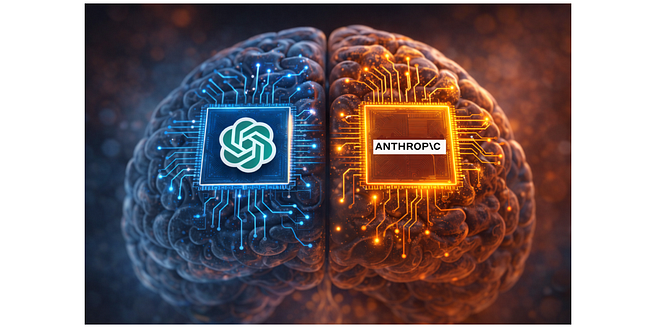
Together, they point to a future where AI doesn’t just answer health questions but shapes what happens before, during, and after you see a doctor.
If that sounds abstract, here’s what it could mean in practice: shorter insurance delays, clearer conversations with your doctor, and less time lost to paperwork and confusion.
Brain #1: An AI That Helps You Understand Your Health
ChatGPT Health is designed for people, not institutions. It’s a secure space inside ChatGPT where you can bring together medical records, lab results, and wellness data and actually make sense of them.
Instead of bouncing between patient portals, PDFs, and apps, you can ask simple, human questions:
- “How has my cholesterol changed over time?”
- “What should I ask my doctor at my next appointment?”
The answers are grounded in your own data, not generic advice.
Privacy is a core part of the design. Health conversations and files live in a separate, protected space, and OpenAI says they aren’t used to train its broader AI models. That matters because millions of people already turn to ChatGPT with health questions every week and formalizing a protected health zone helps reduce both privacy risk and confusion.

Just as important: doctors were heavily involved in shaping how ChatGPT Health responds. Instead of optimizing for “right answers on a test,” the system is evaluated against medical accuracy standards that prioritize clarity, safety, and knowing when to tell someone to talk to a real clinician.

What ChatGPT Health does not do is diagnose or treat disease. Its role is more subtle but powerful: helping people spot patterns, understand tradeoffs, and walk into medical visits more informed and less overwhelmed.
Brain #2: An AI That Helps the Healthcare System Move Faster
If ChatGPT Health lives on your phone, Claude lives behind the scenes — inside the machinery of healthcare itself.

Anthropic, the company behind Claude, is focused on using AI to reduce the massive administrative burden that slows care down. Think of Claude as software designed to handle the plumbing that connects doctors’ offices, hospitals, and insurance companies.

One of the clearest examples is insurance approval. Today, getting a procedure approved often means weeks of back-and-forth: checking coverage rules, matching billing codes, reviewing medical notes, and documenting everything for compliance.
Claude can assist with that process by:
- Checking whether a procedure meets insurance criteria
- Verifying documentation
- Flagging missing information
- Drafting a review-ready recommendation for human staff

The goal isn’t to replace people — it’s to shrink the time spent on paperwork so clinicians can focus on care.

This kind of system-level AI matters because so many healthcare delays aren’t medical at all. They’re administrative.

They’re about how hospitals get paid, how approvals are processed, and how information moves (or doesn’t) between systems.
One Brain Helps You. The Other Helps the System.
Here’s the simplest way to think about it:
- One AI helps you understand your health.
- The other helps the healthcare system get out of its own way.
That difference matters.
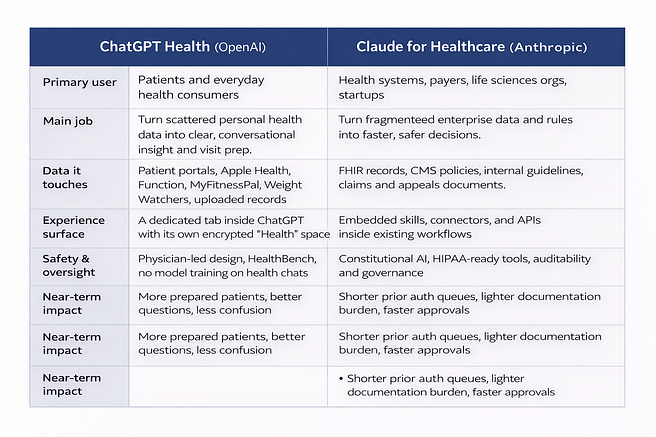
The risk with patient-facing AI is oversimplification — people mistaking guidance for medical advice. The risk with system-level AI is the opposite: efficiency moving faster than accountability.
Both only work if humans stay firmly in the loop.
Where This Gets Interesting
The most important future isn’t one where one AI “wins.” It’s where these two kinds of intelligence quietly meet in the middle.

Imagine this (hypothetical for now):
You use ChatGPT Health to prepare for a lung biopsy appointment — understanding your test results and knowing what questions to ask. At the same time, behind the scenes, a system like Claude is helping process the insurance approval for that same procedure.

If you’ve ever waited weeks for an insurance decision, you already understand why that matters.
If patient-facing tools succeed, doctors may start seeing patients who arrive better prepared and clearer about their goals — freeing visit time for real decision-making instead of basic explanations.
If system-level tools succeed, fewer treatments will stall because of paperwork, and fewer clinicians will burn hours navigating bureaucracy.
A Quiet Third Layer: Memory
There’s a third piece quietly emerging between these two brains: memory.
One of the biggest reasons healthcare still feels fragmented isn’t lack of intelligence it’s lack of continuity. Your records live across hospitals, labs, insurers, wearables, and patient portals, with no single place where the full story comes together.
That’s the problem Torch set out to solve.
Torch was built as a kind of medical memory for AI, a way to unify scattered health records into a single context engine, so nothing important gets lost in the noise.
Memory is what allows intelligence to compound instead of reset at every visit, every form, every handoff.
What This Means for the Next Decade
This future isn’t guaranteed. It depends on how well these systems respect consent, protect data, and stay transparent about who’s responsible when something goes wrong. It also depends on whether we measure success by real-world outcomes — not marketing claims.

But one thing is clear: healthcare now has two new brains.
And in the coming years, your doctor may walk into the room with a second kind of intelligence at their side — one that remembers everything, notices patterns humans miss, and handles the parts of medicine humans were never meant to do.
The real question isn’t whether AI will be involved.
It’s how wisely we choose to use it.
💡 Loved this? Don’t miss Issue #83 of AIHealthTech Insider, covering how ChatGPT Health and Claude are reshaping healthcare from the patient and system sides plus early biological signals, AI-driven immunotherapy, sleep as a longevity marker, and passive health sensing from CES 2026.
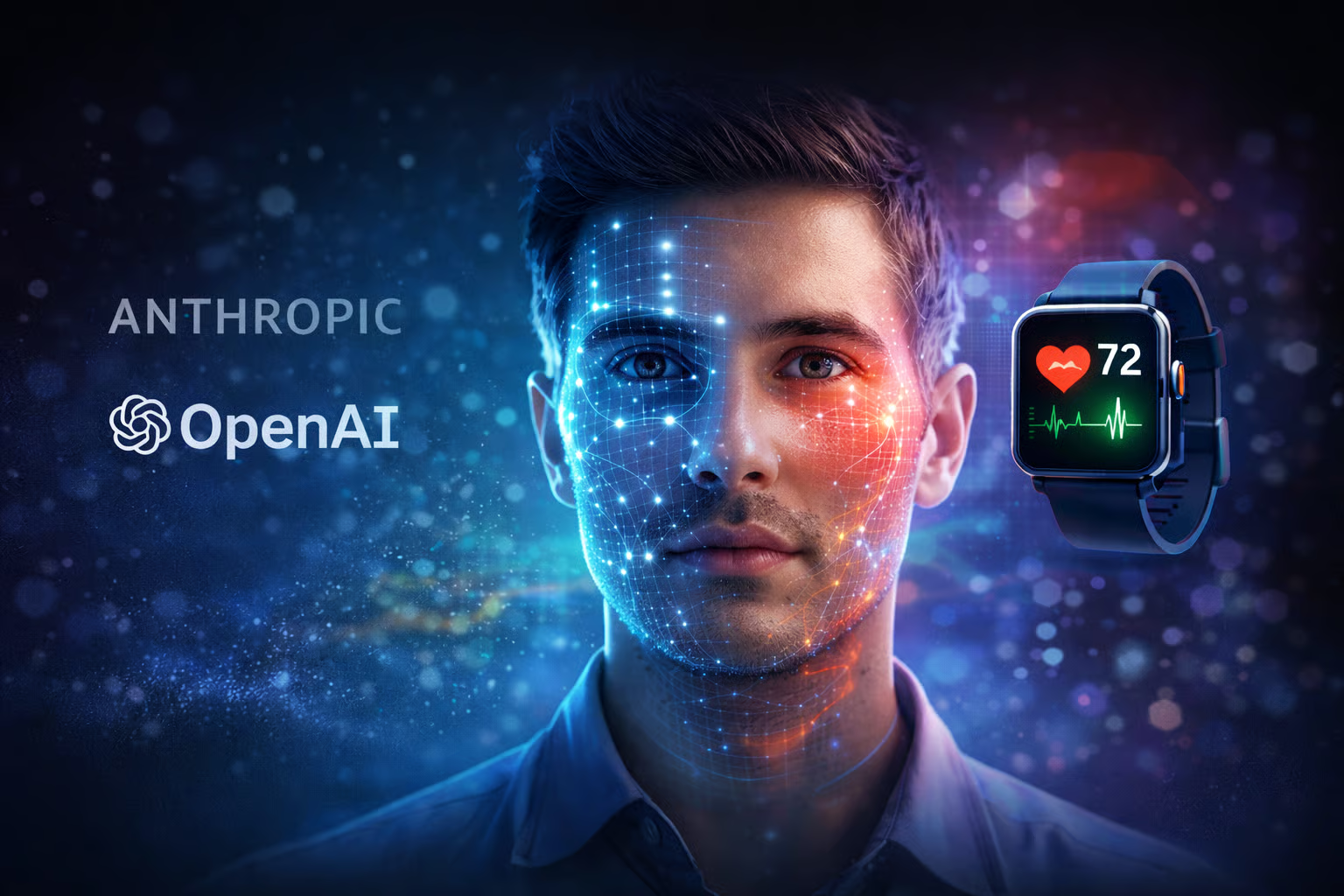
AI Breakthrough: Face Tech Turns Smartwatches into Health Detectors | AIHealthTech
AI Healthcare Revolution: Anthropic Launches Claude for Providers, Transforming Medical Workflows with HIPAA-Ready AI tools for providers, payers, and consumers, and enhancing life sciences capabilities. aihealth.standout.digital